
Client experience is the lifeblood of any small tax firm. Yet not many take the time to evaluate how clients feel about working with them. Even fewer make adjustments based on what they find.
For example, clients often wait days before hearing that their documents were received. It’s also common for important information to get buried in email threads. More often than not, firms only reach out when it’s time to file.
Let’s take a closer look at where these gaps show up and what you can do about them.
Inconsistent Communication Creates Uncertainty
Communication often becomes uneven during busy seasons. You may respond quickly to one client while another waits days for an update. From your side, the workload explains the delay. From the client’s side, silence feels like poor service.
Approximately 32% of customers will leave a business after just one negative experience.1 Slow or confusing communication is often that tipping point. Clients now expect the same transparency they get from online retailers. When they don’t hear from you, doubt sets in.
Firms that want to fix this are setting a defined schedule for check-ins and using centralized portals to give clients visibility into their return status. Some also assign communication responsibilities across the team so no single person becomes a bottleneck.
Document Sharing Concerns Clients Don’t Voice
Emailing sensitive documents remains common in many small firms. Clients often comply because they trust you, but that doesn’t mean they feel comfortable. Sending tax documents through email raises concerns about privacy, even if clients never mention it.
Disorganization further adds to the frustration. Clients may resend documents because they are unsure if you received them. You may search inboxes to locate files sent weeks earlier. This back-and-forth wastes time on both sides.
Secure document sharing removes this tension. When clients have a clear place to upload and view files, the process feels professional and safe. You reduce confusion while reinforcing trust in how you handle sensitive information.
Overly Complicated Processes Drive Quiet Frustration
Tax work is complex by nature, but your processes don’t need to feel that way to clients. When every task requires multiple emails or unclear handoffs, clients start to feel like working with your firm takes more effort than it should.
Accounting client management software simplifies this. It keeps client records, communication history, and task assignments in one place. You can see where each client stands without digging through inboxes or spreadsheets.
When you have everything in one place, you respond faster, and clients spend less time waiting or repeating themselves.
Slow Turnaround on Simple Requests
Not every delay involves complex work. Sometimes small requests take longer than clients expect because they get lost in email threads or task lists. Clients may hesitate to follow up, assuming you are busy, but the delay still affects their perception of you.
These slowdowns create friction. Clients begin to feel that working with your firm requires extra effort. Over time, that feeling can outweigh the value of your technical expertise.
Better organization helps you respond faster without working longer hours. When requests are tracked and visible, you can prioritize effectively. Clients experience smoother service, and you regain control over your workload.
Only Reaching Out at Tax Time
Many small firms only contact clients when it’s time to file. The rest of the year, there’s silence. Clients may not complain, but they notice.
This pattern makes the relationship feel transactional. Clients start to see you as someone who processes paperwork rather than someone who helps them plan ahead. When a firm that offers year-round communication comes along, switching feels like an upgrade.
Even simple check-ins outside of tax season can change this. A quarterly update or a reminder about estimated payments shows clients you’re thinking about their situation before deadlines hit.
Why Clients Rarely Complain Directly
Many clients won’t tell you when they’re unhappy. Some feel it’s easier to switch firms than have a difficult conversation. Others worry that raising concerns could affect their tax returns.
This creates what’s often called silent churn. Minor issues like slow responses or missed updates don’t feel worth mentioning on their own. But over time, they add up and push clients toward other options.
Without a formal way to collect feedback, you may assume everything is fine simply because no one has complained. Paying attention to patterns like repeated follow-ups or confusion about next steps can help you catch problems early.
Closing Experience Gaps With Better Systems
Improving client experience starts with visibility and consistency. You don’t need to overhaul your firm overnight. Small improvements in how you communicate and organize information make a measurable difference.
Tools that support transparent communication and secure document exchange help close experience gaps naturally. For example, client tax portal software allows clients to upload documents and check their return status in one place. It also lets you set alerts for overdue items so you only step in when something needs your attention.
The best part is that these tools run in the background and keep things moving without adding to your workload. That means fewer missed follow-ups and a smoother experience for your clients.
Turning Frustration Into Loyalty
Every gap in the client experience is an opportunity to keep clients from quietly moving on. Start by looking at where clients drop off or stop responding. Look into whether your onboarding sets clear expectations in the first 90 days.
You can also add a short feedback survey after the filing season. Most firms assume clients are satisfied because no one complains, but that silence often hides frustration.
When you act on what clients tell you, retention improves, and referrals follow without you having to ask. That’s how small fixes turn into long-term growth.
Video
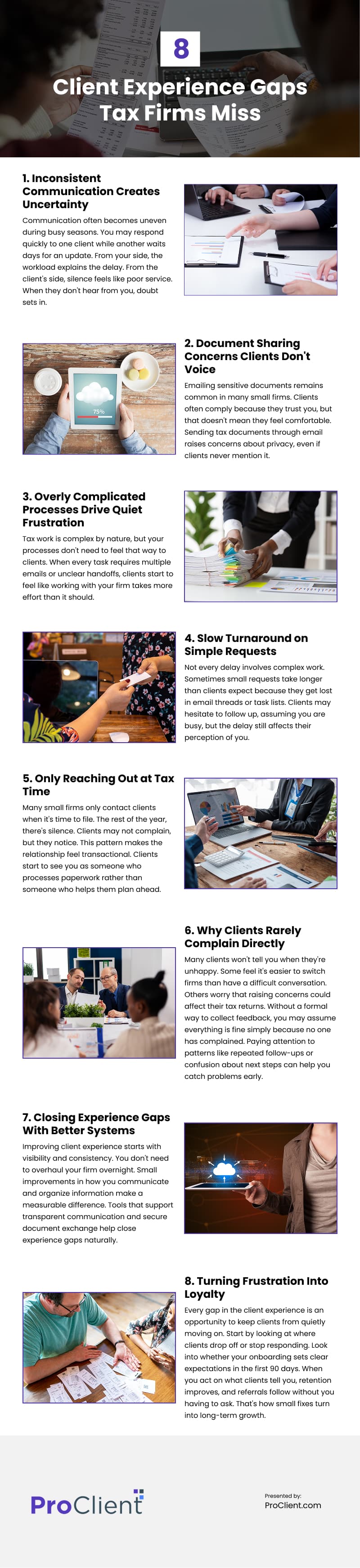
Infographic
Client experience is critical to the success of small tax firms, yet it’s often overlooked or assumed to be satisfactory without meaningful evaluation. This infographic highlights the client‑experience gaps tax firms frequently miss and why addressing them can strengthen retention and trust.
1https://www.pwc.com/us/en/advisory-services/publications/consumer-intelligence-series/pwc-consumer-intelligence-series-customer-experience.pdf#page=9