When your accounts receivable lag behind, your business feels the pinch. Delays in collecting payments disrupt cash flow, slow operations, and make it harder to cover vendors or payroll.
Fortunately, there are ways to tighten your AR process and get cash in the door faster.
If you’re looking to improve your receivables collection while maintaining strong client relationships, here are seven practical strategies to implement.
1. Set Clear Payment Terms from the Start
Your accounts receivable process starts well before you send an invoice. If your payment terms are vague or inconsistent, you’re setting yourself up for misunderstandings.
Make sure each new client or contract includes clearly stated terms like:
- Due date
- Accepted payment methods (ACH, credit card, etc.)
- Late payment penalties or interest
- Any early payment incentives
Align your contracts, invoices, and reminders around the same terms so that no client can claim confusion about when or how to pay you.
2. Invoice Promptly and Accurately
Delays in sending invoices almost always mean delays in payment. It sounds simple, but many businesses wait days or even weeks after finishing the work before issuing an invoice. By then, the urgency is gone, and clients are less likely to prioritize it.
Aim to invoice immediately after services are delivered or projects are completed. The quicker it goes out, the quicker it enters the client’s approval and payment cycle.
Equally important: double-check invoices for errors. A wrong amount, a missing PO number, or incorrect contact details can all slow things down. You can use financial document management software to organize supporting files and quickly retrieve the right details before sending an invoice.
3. Automate Payment Reminders Without Losing the Human Touch
Chasing payments manually is exhausting and inefficient. You can save time and speed up collections by using accounting billing software to automate reminder emails as due dates approach.
A good system will allow you to:
- Send scheduled reminders before and after the due date
- Customize tone and frequency
- Escalate reminders for severely overdue invoices
That said, automation should never feel robotic. You should personalize messages when needed, especially with long-term or high-value clients. A short, polite message that acknowledges your relationship while requesting payment can maintain goodwill.
4. Offer Multiple Payment Options
Your clients are more likely to pay you quickly if you make it easy for them. Restricting payments to paper checks or bank wires adds friction to the process.
Instead, offer a variety of digital payment methods, such as:
- ACH transfers
- Credit and debit cards
- Online portals or payment links
- Digital wallets (if applicable to your industry)
The less effort it takes to pay you, the faster you’ll receive funds.
5. Monitor AR Aging Reports Consistently
Accounts receivable aging reports give you a clear view of unpaid invoices and how long they’ve been outstanding, usually in ranges such as 0–30, 31–60, or 61–90 days. If you ignore these reports, late invoices pile up and weaken cash flow.
Review them every week and flag accounts as soon as they move into a later stage. The longer an invoice sits unpaid, the harder it is to collect without added effort.
Use these reports to spot client patterns. If you see repeat late payments, tighten their terms, ask for larger deposits, or set earlier follow-ups to protect your receivables.
6. Set a Formal Collections Process
Even with clear communication, some clients will delay payments. That’s why a structured collections process is essential.
A simple workflow could be:
- First reminder: Automated email three days before the due date
- Second reminder: Manual email five days after the due date
- Third reminder: Phone call or personal message at 14 days
- Final notice: Escalation or service suspension
With this in place, your team will know exactly how to respond, and your clients will understand the consequences of delaying payment.
7. Reward Prompt Payers (and Discourage Late Ones)
While penalties for late payment can deter delays, incentives for early or on-time payments can positively reinforce better behavior.
Consider offering a small discount for invoices paid within 10 days, or giving priority booking or extended support to clients who consistently pay on time.
On the flip side, you might consider enforcing modest late fees or interest on overdue invoices (if you’ve included those terms in your contracts). This gives clients more reason to prioritize paying you over other vendors.
Better Processes Lead to Better Cash Flow
Improving accounts receivable doesn’t mean pushing clients harder. It means creating systems that make timely payments routine. By streamlining invoicing, follow-ups, and reporting, you keep cash flow steady and give clients a smoother, more reliable payment experience.
Video

Infographic
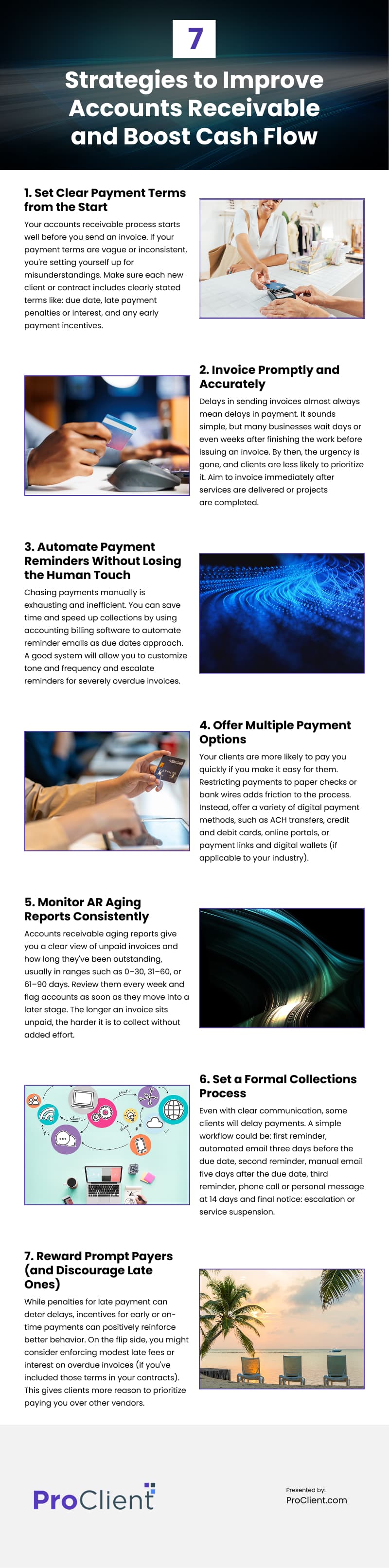
Delayed accounts receivable can harm your cash flow, impacting expenses and operations. Improving your AR process can speed up collections and maintain client relationships. Check out this infographic for strategies to enhance your accounts receivable and boost cash flow.